
The Courage to Create Introduction: From Rejection to Innovation with Dr. Scott Anderson

The Courage to Create
 Innovation rarely begins with perfect conditions. More often, it begins with curiosity, learning, and the courage to take the first step. Neuroscience shows that when we embrace new experiences and challenge ourselves to learn, the brain forms new neural pathways, strengthening our capacity for creativity, problem-solving, and growth. Every small step forward literally reshapes the brain, turning possibility into progress.
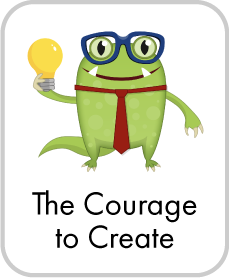
This season is a tribute to Fred our mascot whose inspiration came from our CEO’s grandfather and to every person who has ever started with nothing more than an idea.
I Love Learning Podcast, S4 EP Introduction: Scott Anderson
What Scott Had the Courage to Create
When people hear the word innovation, they often picture revolutionary inventions or billion-dollar companies. But Dr. Scott Anderson offers a different perspective.
Scott didn’t set out to become an innovator. He simply wanted to solve problems.
With a Ph.D. in Engineering, he founded RemSense as a one-person company, pursuing research opportunities and writing proposal after proposal. Like many entrepreneurs, he faced rejection far more often than success. Yet each setback became another opportunity to learn, refine his ideas, and keep moving forward.
Rather than seeing obstacles as failures, Scott embraced them as part of the creative process. His willingness to adapt eventually led him to co-found Luma Brighter Learning, where engineering, neuroscience, and learning science came together to create innovative learning experiences that have impacted organizations and learners around the world.
His story reminds us that innovation is rarely one defining moment. It is a series of courageous decisions to continue creating, even when the path ahead is uncertain.
Anyone Can Create
One of the most powerful messages from our conversation was Scott’s belief that innovation belongs to everyone.
You don’t have to invent the next groundbreaking technology.
You don’t need a Ph.D.
You don’t have to start a company.
Innovation can be improving a process at work.
It can be finding a better way to teach a student.
It can be helping a customer solve a problem.
It can be encouraging a colleague, redesigning a workflow, creating a new habit, or asking a question no one else has considered.
Innovation begins the moment we decide that something can be made better.
That mindset transforms creativity from a rare talent into a daily practice.
Learning Fuels Creation
As a learning scientist, I especially appreciated Scott’s emphasis on curiosity.
Every time we learn something new, our brains strengthen the neural pathways that support creativity, adaptability, and problem-solving. Learning gives us more than knowledge, it expands our capacity to imagine new possibilities.
The courage to create doesn’t come from knowing exactly how everything will work.
It comes from trusting that we can continue learning as we move forward.
Your Courage to Create
Scott’s journey reminds us that meaningful innovation doesn’t happen because someone is fearless. It happens because they continue despite uncertainty.
Whether you’re an educator, leader, entrepreneur, healthcare professional, mechanic, warehouse worker, parent, or student, you have opportunities every day to improve something for someone else.
You don’t need permission to create.
You simply need the courage to take the first step.
Reflection Question
What have you had the courage to create—and what small idea might you finally bring to life this week?
🎙️ Listen to the full conversation with Dr. Scott Anderson on Season 4 of the I Love Learning Podcast: The Courage to Create.
Check out this week’s episode:
 Never miss an episode! Be sure to subscribe to the I Love Learning Podcast with Dr. Gina Anderson on YouTube, Spotify, and Apple Podcasts.